
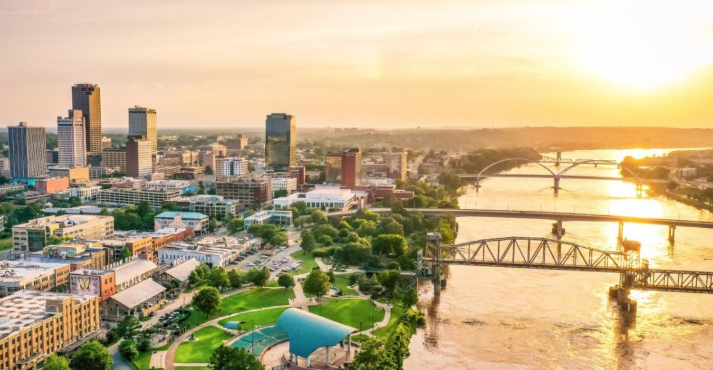
New Federal Bureau of Labor Statistics data shows historic highs in regional employment, backed by top national rankings from LinkedIn, Forbes, and the Federal Reserve.
LITTLE ROCK, AR (July 30, 2026) — The Little Rock-North Little Rock-Conway metropolitan area has reached historic employment highs, again setting a new record for the total number of employed residents across the region.
According to the latest Local Area Unemployment Statistics (LAUS) report from the U.S. Bureau of Labor Statistics, total civilian employment in the Little Rock metro surged past 385,000, accompanied by a robust total labor force that topped 400,000 for the first time. The data reflects unprecedented regional economic momentum, low unemployment, and steady expansion across key industrial, commercial, and professional sectors.
The landmark employment figures build on a growing series of national accolades highlighting Little Rock as a premier destination for business expansion, talent attraction, and long-term economic resilience:
● LinkedIn’s "Cities on the Rise": LinkedIn recently ranked Little Rock among the Top 25 Fastest-Growing Cities for Jobs in the United States. LinkedIn praised the capital region’s quality of life and expanding global supply chain footprint—highlighting strategic industrial investments at the Port of Little Rock and transformative downtown developments reshaping the city's appeal.
● Federal Reserve Capital City Analysis: Reports from the Federal Reserve rated Little Rock second in gross domestic product (GDP) growth among regional state capitals and peer-sized cities, trailing only Nashville, Tennessee.
● Forbes & National Young Professional Destinations: Forbes and top national rankings continue to emphasize Little Rock's emerging reputation as a hotspot for young professionals, driven by low cost of living, rapid job growth in technology, healthcare, and logistics, and vibrant urban amenities.
● Livability’s Top 100 Best Places to Live in the U.S. (2025): Ranked among the nation’s top mid-sized cities, earning high scores specifically for affordability, transportation infrastructure, and urban amenities.
● Kiplinger’s Personal Finance: Previously named Little Rock #1 on its "10 Great Places to Live" list for mid-sized cities (under 1 million residents), recognizing its strong job market, reasonable cost of living, and medical infrastructure.
● Forbes & Business Facilities Top Mid-Sized Metros: Recognized for its growing technology footprint, low cost of doing business, and rapid job creation in logistics and specialized manufacturing.
● Southern Living’s "Best Cities in the South": The publication highlighted Little Rock as offering "the best of both worlds"—combining high-end metropolitan dining, nightlife, and arts (like the Vogel Schwartz Sculpture Garden) with world-class outdoor recreation along the Arkansas River, including the Big Dam Bridge.
Driven by career opportunities and lifestyle amenities, net in-migration has become the primary engine of demographic growth for the Little Rock MSA, with an influx of young professionals in their late 20s and 30s relocating to the Little Rock metro to build careers, start families, and enjoy the region's outdoors and urban energy.
“Our city consistently leads the way for the state and region in economic growth and resiliency because of our collaborative and intentional work to attract high-paying jobs and improve quality of life and place for all our residents,” said Little Rock Mayor Frank Scott, Jr. “This type of national recognition is becoming commonplace as stakeholders like the Little Rock Regional Chamber, Port of Little Rock, Clinton National Airport, the Arkansas Economic Development Commission, and regional utility and community partners work together to recruit employers. Year after year, we are setting records for total workforce employment, and the best is still yet to come.”
Regional growth has been particularly pronounced in manufacturing, logistics, tech-adjacent industries, and trade, supported by ongoing infrastructure upgrades, public park investments, and forward-looking economic development policy.
“The Little Rock region has a long track record of working together to provide the infrastructure that allows us to attract investment and create high-quality jobs,” said Jay Chesshir, President and CEO of the Little Rock Regional Chamber. “Our economy has grown rapidly and through continued collaboration across the private and public sectors, we are building an environment where companies can flourish, scale, and provide extraordinary opportunities for the people of metro Little Rock.”
As the metro area continues to break employment thresholds, city and regional economic leaders remain focused on sustainable growth, workforce development pipelines, and infrastructure investments to ensure the Little Rock region remains a competitive hub for corporate investment and top-tier talent.
For full BLS economic data tables, visit https://www.bls.gov/eag/eag.ar_littlerock_msa.htm.