
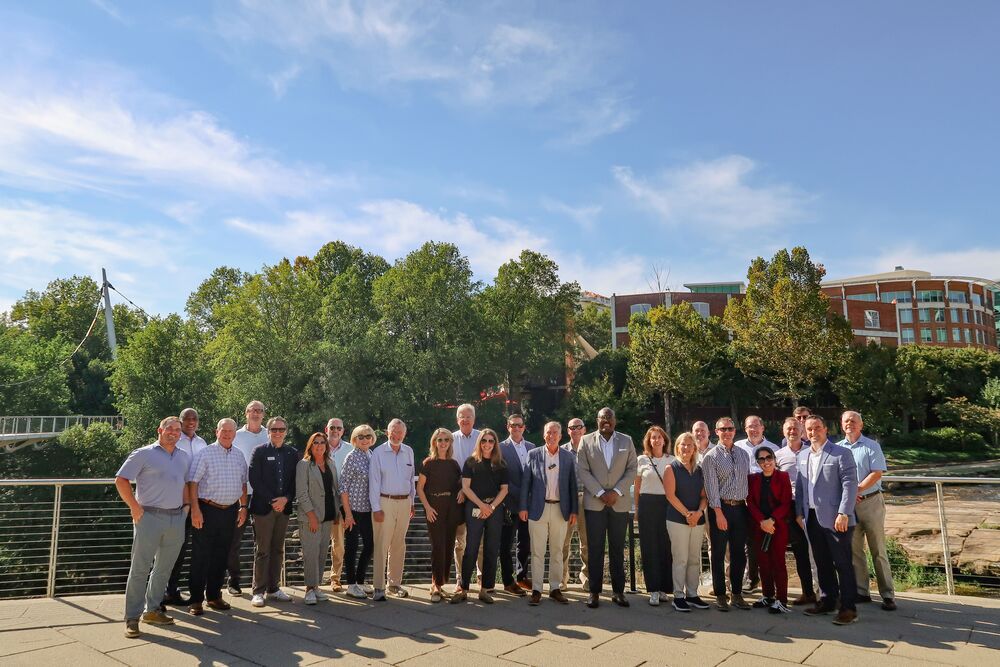
Our recent Intercity Visit to Greenville, South Carolina, gave us a lot to think about as we continue looking toward Little Rock’s future.
Greenville was selected because its story has meaningful parallels to where Little Rock is today. Over the past three decades, Greenville has transformed from a community shaped by the decline of the textile industry into a growing regional center known for its downtown, quality of place and economic development. That transformation was driven by long-term investment, strong civic leadership and public-private partnerships.
As Little Rock moves forward with opportunities like the Downtown Master Plan, 30 Crossing Park and the potential for transformational manufacturing investment, Greenville offered a chance to learn from a community that has navigated many of these same conversations.
During the visit, Little Rock-area business and community leaders heard directly from the people behind Greenville’s growth, from a downtown walking tour with Mayor Knox White to a visit to BMW Manufacturing and a closer look at its impact on the regional economy.
Falls Park in downtown Greenville was originally highway infrastructure and is now a bold story of revitalization and public green space. Mirroring our goals for 30 Crossing Park, the redeveloped space changed the face of Greenville and its downtown, while also facilitating over $600 million in private investment around the space.
Unity Park helped cast a vision for a reimagined War Memorial Park. Dozens of families, hundreds of children, and after school groups filled the park. The 60-acre urban park blends rich history, state-of-the-art recreation, and beautiful natural restoration right along the Reedy River with many parallels to what’s possible at War Memorial Park.
The visit to BMW provided an understanding of how landing an automotive manufacturer can transform a region and its economy. BMW is now up to 11,000 employees and over 60 suppliers have landed in the upstate region of South Carolina as a result. This is exactly the type of outcome we hope to achieve with the Little Rock Port Megasite.
A primary observation of Greenville was the efforts to ensure it was clean and safe. Downtown ambassadors walked the streets and highly visible “litter crews” picked up trash while city staff pressure walked sidewalks in the primary corridors. The city enacts a juvenile curfew, with visible signage and strong enforcement, which has curbed public safety incidents. As downtown Greenville developed, so did the downtown residential population, which created additional eyes and ears on the street, further improving public safety. Municipalities across the country regularly study Greenville because its immaculate downtown vibe didn't happen by accident. It is the direct result of highly coordinated, aggressive public-private partnerships, smart environmental design, and active street teams.
At each stop, we kept coming back to the same questions: What problem were they trying to solve? Who came together to make it happen? How was it funded? What made the community willing to take the risk? And could a similar approach work in Little Rock?
What stood out most was that Greenville’s progress wasn’t the result of one project or one investment. It was the result of decisions made over time and people from different sectors working together toward a shared vision.
We didn’t leave Greenville with a blueprint for Little Rock, and that wasn’t the goal. We left with new ideas, different perspectives and a better understanding of what it takes to turn big opportunities into lasting change. The next step is figuring out what we can take from Greenville’s experience and apply here at home.